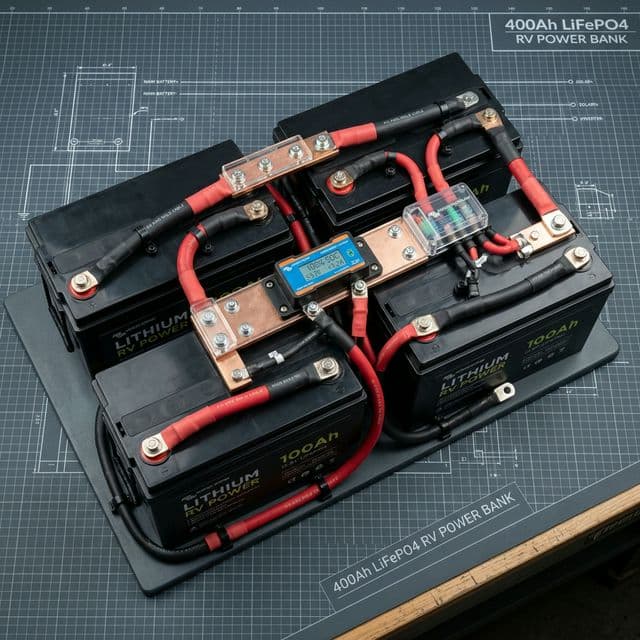
RV Battery Bank Sizing Guide: Engineering Your Lithium Storage
Sizing an RV battery bank is one of the few places where 'bigger is better' can actually be a mistake. Between the weight penalties of lead-acid and the cost premiums of lithium, finding your 'Goldilocks' capacity is a technical art form. This 2,000-word guide breaks down the physics of energy storage to help you build a battery bank that never leaves you in the dark.
1. The Energy Audit: Your Daily Power Budget
Before you buy a single battery, you must perform an energy audit. Most people overestimate their needs during the day and underestimate them at night. An energy audit is a simple spreadsheet where you list every appliance, its Wattage (or Amperage), and how many hours you use it. For example, a 12V compressor fridge might only draw 50 Watts, but because it runs 24 hours a day (at a 20-30% duty cycle), it will consume more energy than your 1500W microwave used for 5 minutes of reheating.
In 2025, we categorize RVers into three 'Energy Personas':
- The Weekend Warrior: Minimalist needs (lights, water pump, phone charging). Typically 100Ah of capacity is plenty.
- The Full-Time Nomad: Laptops, fridge, MaxxFan, occasional blender. Requires 200Ah to 400Ah.
- The Digital Overlander: Starlink, induction cooktop, 12V Air Conditioning. Needs 600Ah to 1000Ah+.
Size it right, build it once.
Continue Your Solar Journey
Master the art of off-grid energy with our most recent expert-vetted guides and reviews.

Smart RV Cybersecurity: Protecting Your Off-Grid Network in 2026
Your camper is a rolling data target. Learn how to physically and digitally secure your Starlink, Victron Gateway, and IoT devices from malicious actors roaming crowded RV parks.
Read Full Guide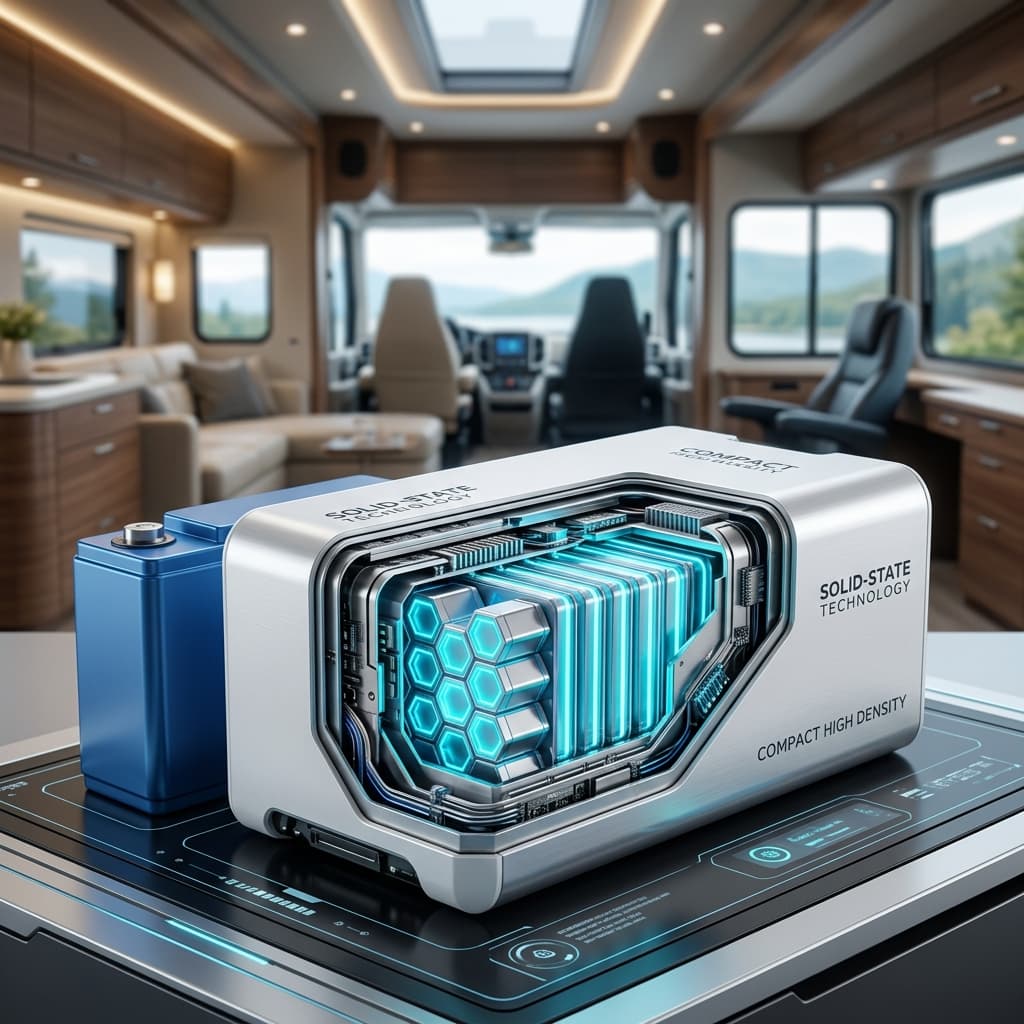
The End of LiFePO4? Solid State Batteries Arrive in the 2026 Caravaning Market
Twice the energy density, half the weight, and zero fire risk. Solid-state technology is no longer a dream, it's the 2026 reality for high-end RV builds.
Read Full Guide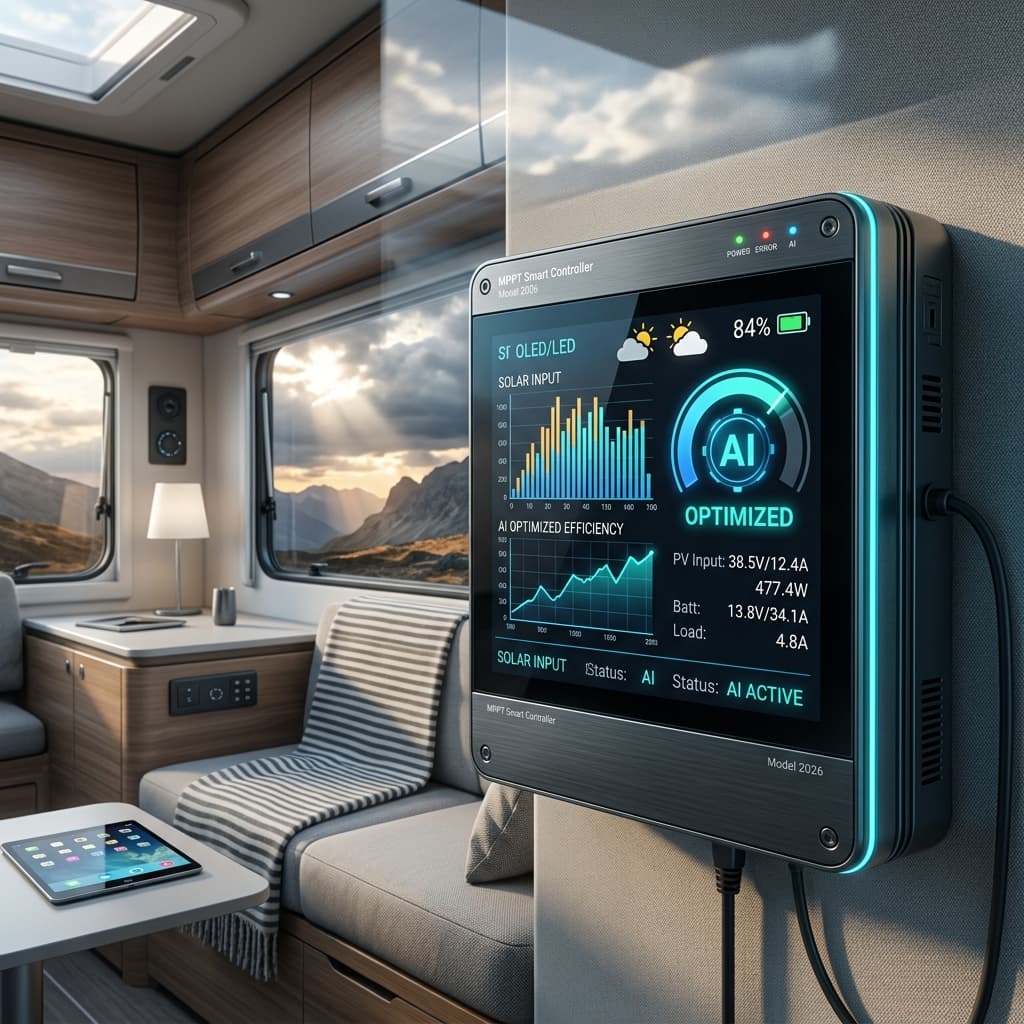
AI-Powered MPPT Solar Controllers: Real Engineering Breakthrough or 2026 Marketing Hype?
The solar industry has finally embraced Big Data. Is a weather-predictive AI MPPT worth the upgrade for your RV, or is a standard Victron still the better choice?
Read Full Guide