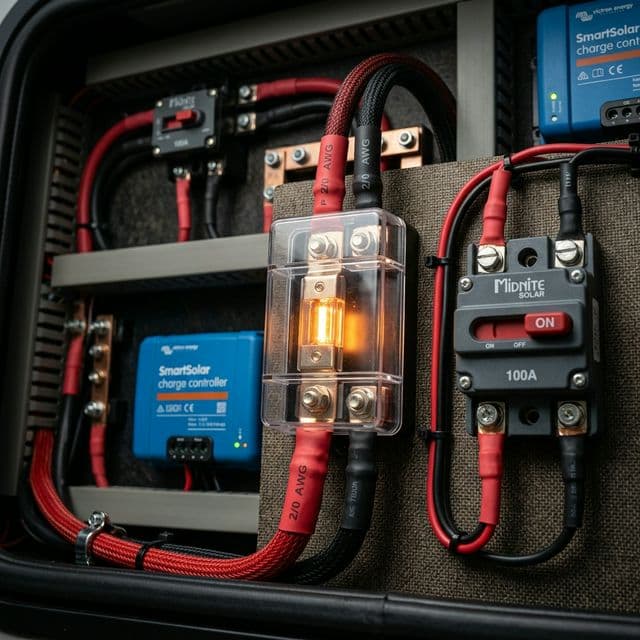
How to Safely Fuse Your RV Solar System: A Quick Guide to Circuit Protection
A common mistake in DIY RV solar installations is skipping the safety fuses. "It's only 12 volts," some might say. But in reality, a large LiFePO4 battery bank can discharge hundreds of amps into a short circuit, creating enough heat to melt 4/0 AWG cables and spark a structural fire in seconds. In this 2,000-word safety audit, we map out the exact circuit protection strategies required for a professional mobile build.
1. The Physics of the Short Circuit: Why Fuses Matter
When a positive wire touches the metal frame of your RV (or a negative wire), it creates a 'short circuit.' With no resistance, the electricity flows at the maximum capacity of the source. For a 400Ah Lithium battery, this could be 3,000 to 5,000 Amps for a split second. A standard wire is not a pipe; it's a resistor. When 5,000 Amps flow through a wire rated for 100 Amps, the wire instantly becomes a heating element, glowing red-hot and igniting its plastic insulation. A fuse's only job is to be the 'weakest link', melting safely before the wire does.
2. Critical Circuit Map: The Three Mandatory Zones
Frequently Asked Questions
Q: Should I fuse the negative side too?
A: No. In DC systems, we only fuse the positive (hot) side. Fusing the negative can cause a safety hazard where a fault could energize the metal frame of the vehicle even if the 'main' negative fuse is blown.
Q: Can I use AC breakers for DC solar?
A: NO. AC breakers rely on the 'zero-crossing' of the current to extinguish an arc. DC current is constant and can easily jump the gap in an AC breaker, resulting in a fire inside the panel. Always use DC-rated protection.
Continue Your Solar Journey
Master the art of off-grid energy with our most recent expert-vetted guides and reviews.

My batteries are full and I don't have anything that needs electricity
In the context of modern off-grid RV solar systems, the scenario "my batteries are full and I don't have anything that needs electricity" highlights a critical ...
Read Full Guide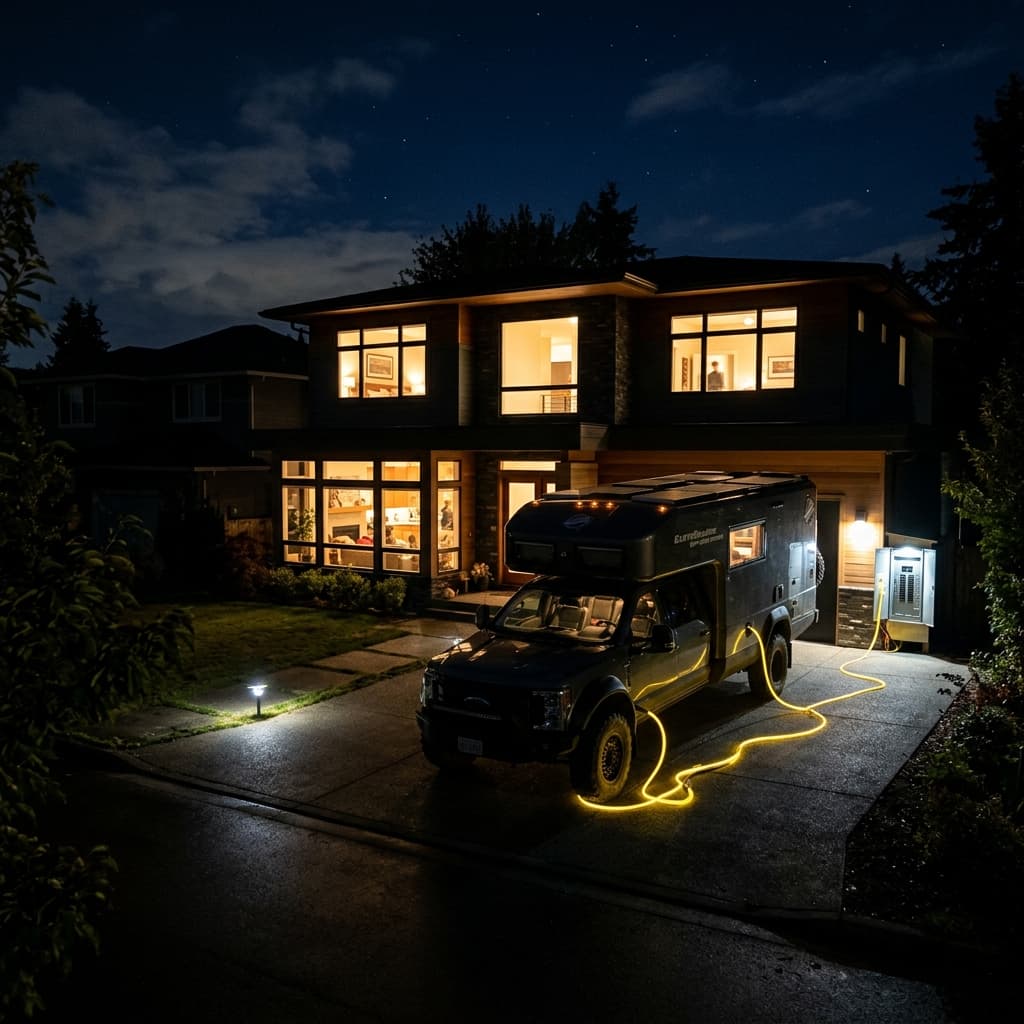
V2H (Vehicle-to-Home) RV Guide: Using Your Camper as a Backup Generator
Don't let your RV battery sit idle. Learn how to configure a V2H (Vehicle-to-Home) system to use your camper's massive solar and lithium bank as an emergency house backup generator.
Read Full Guide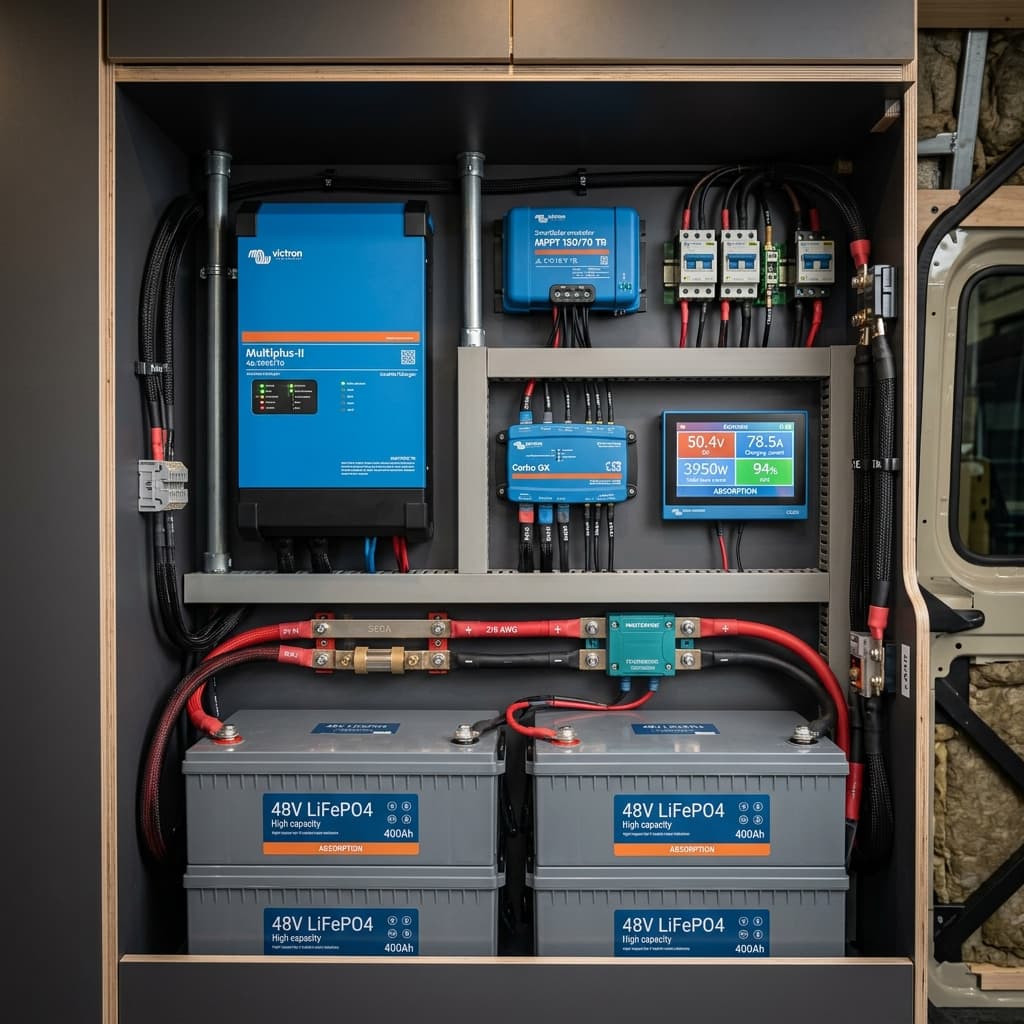
The 48V Architecture Revolution: Why Skipping 12V and 24V is the Right Choice for 2026 Installations
Stop struggling with thick 4/0 cables and overheating inverters. Discover why 48V is the only logical choice for high-demand RV systems in 2026.
Read Full Guide