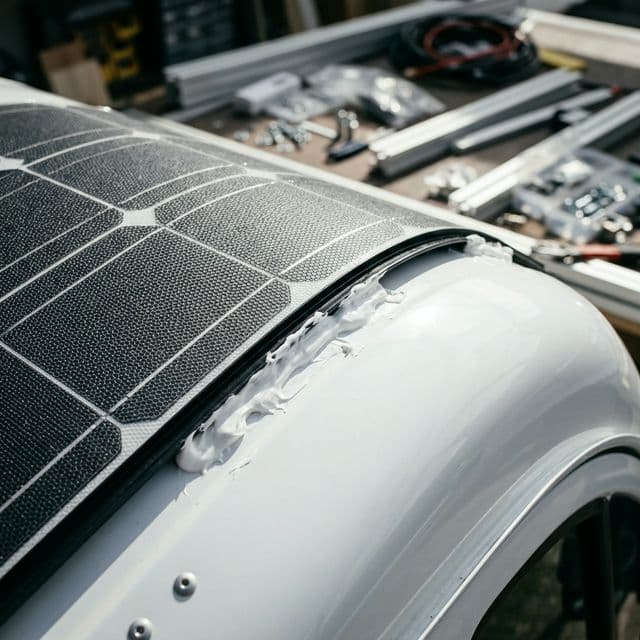
Step-by-Step: Installing Flexible Solar Panels on Curved RV Roofs
Flexible solar panels are the 'holy grail' for aerodynamic camper van builds and curved roof RVs. They offer a sleek, low-profile aesthetic that traditional rigid panels simply cannot match. However, the internet is littered with horror stories of flexible panels failing after just 18 months. In this 2,000-word step-by-step masterclass, we reveal the engineering secrets, including the critical 'air gap' technique, that will ensure your flexible setup lasts for a decade, not a season.
1. The Flexible Choice: ETFE vs. PET
The most common mistake made by budget-conscious builders is choosing a PET-laminated panel. PET (Polyethylene Terephthalate) is essentially a cheap plastic film that eventually yellows and cracks under the relentless UV radiation of the sun. Once the film cracks, moisture enters the cells, leading to delamination and total failure. To build a system that lasts, you must choose ETFE (Ethylene Tetrafluoroethylene). ETFE is a high-strength polymer that is naturally UV-stable and has a self-cleaning surface. While ETFE panels cost roughly 20-30% more, their lifespan is 5x longer than PET. If the product description doesn't explicitly state 'ETFE,' assume it is PET and look elsewhere.
2. Physics of Failure: The Heat Problem
Solar panels work by capturing photons, but they also capture a massive amount of heat. A rigid panel has 1.5 inches of air underneath it to keep the cells cool. A flexible panel glued directly to a metal van roof has nowhere for that heat to go. As the cells heat up, their efficiency drops significantly, a phenomenon called 'Thermal De-rating.' Worse, the constant thermal expansion and contraction between the panel and the roof will eventually break the internal electrical connections. This is why 'flush mounting' is the primary cause of flexible panel failure.
3. The Engineering Secret: The 4mm Air Gap
To solve the heat problem on a curved roof, pro builders use Twinwall Polycarbonate sheets (often used for greenhouse roofing). By adhering your flexible panel to a 4mm or 6mm polycarbonate sheet first, you create micro-channels for air to flow underneath the silicon. This simple 'sandwich' construction keeps the panel 15-20°C cooler during peak sun hours. This layer also provides a consistent, semi-rigid backing that prevents the panel from 'fluttering' at highway speeds, which is another common cause of cell micro-cracking.
Style, curve, and power.
Continue Your Solar Journey
Master the art of off-grid energy with our most recent expert-vetted guides and reviews.

Smart RV Cybersecurity: Protecting Your Off-Grid Network in 2026
Your camper is a rolling data target. Learn how to physically and digitally secure your Starlink, Victron Gateway, and IoT devices from malicious actors roaming crowded RV parks.
Read Full Guide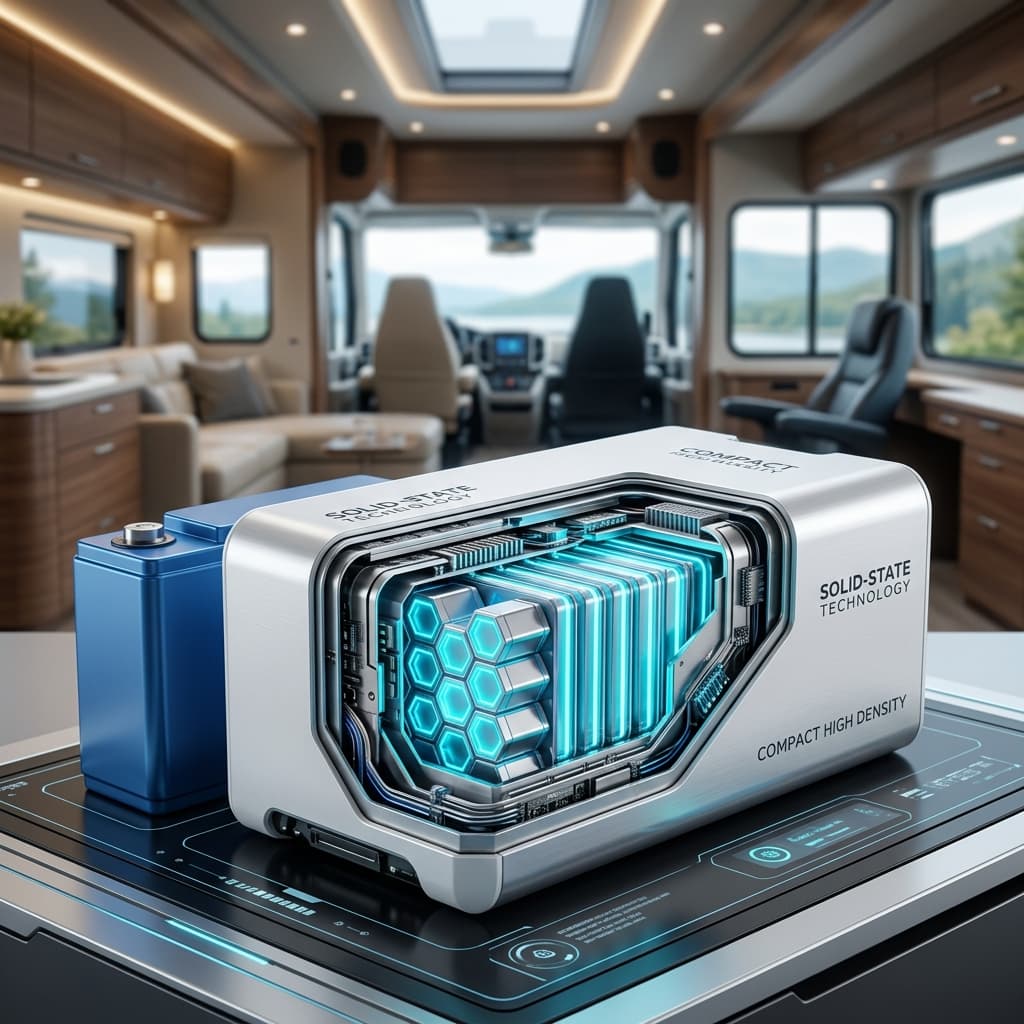
The End of LiFePO4? Solid State Batteries Arrive in the 2026 Caravaning Market
Twice the energy density, half the weight, and zero fire risk. Solid-state technology is no longer a dream, it's the 2026 reality for high-end RV builds.
Read Full Guide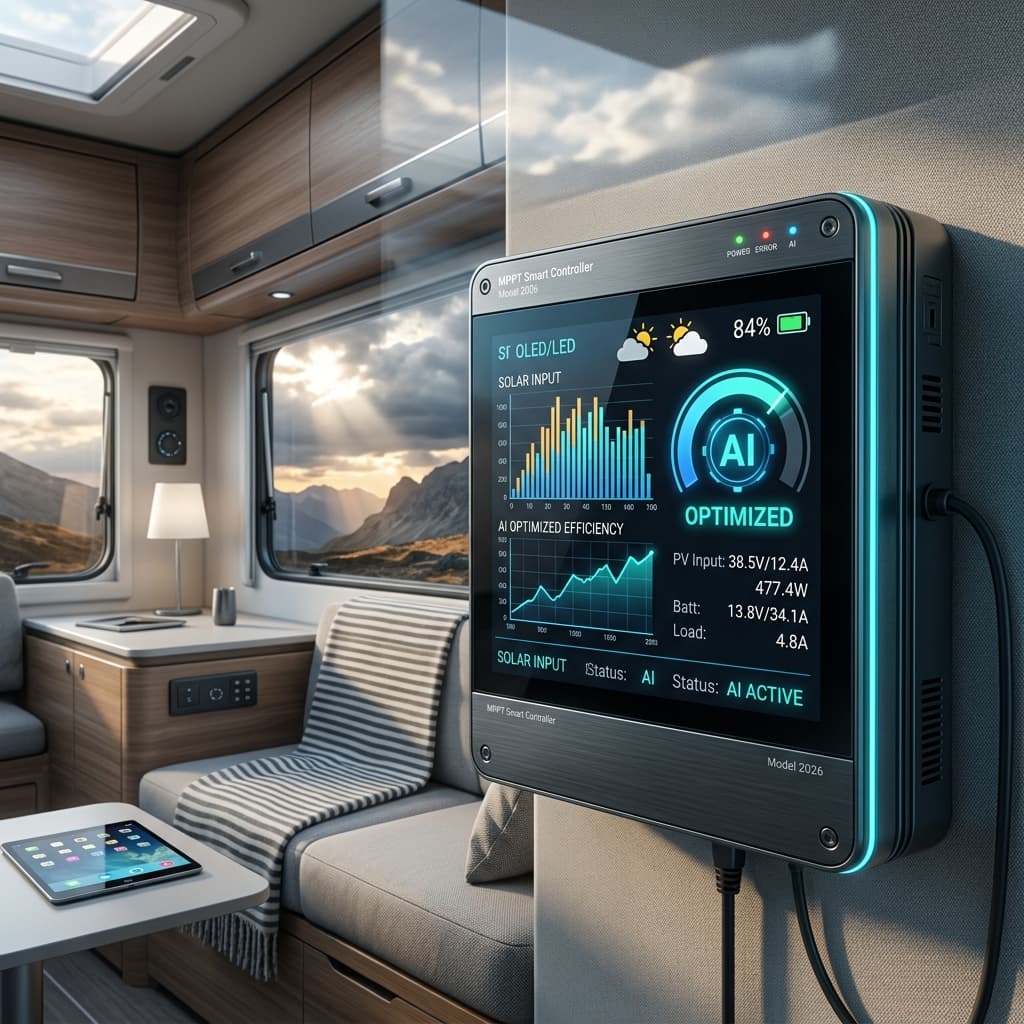
AI-Powered MPPT Solar Controllers: Real Engineering Breakthrough or 2026 Marketing Hype?
The solar industry has finally embraced Big Data. Is a weather-predictive AI MPPT worth the upgrade for your RV, or is a standard Victron still the better choice?
Read Full Guide