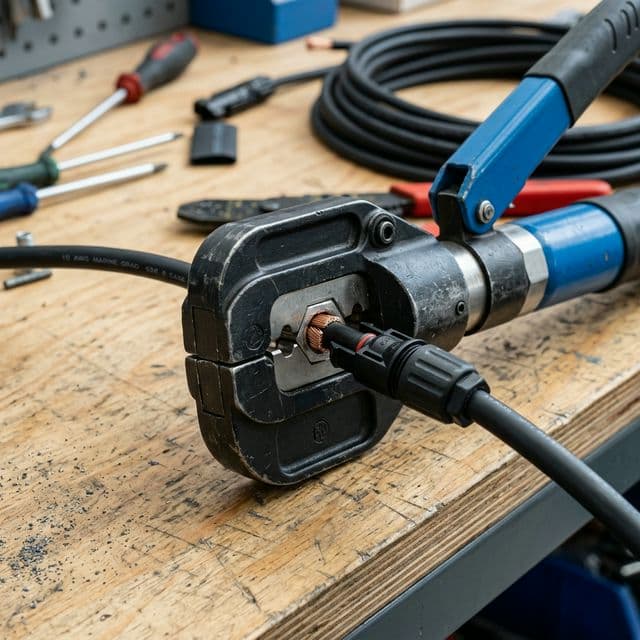
DIY RV Solar Cabling: Selecting Wire Gauges Like a Pro
You can buy the most expensive solar panels and the highest-grade lithium batteries, but if your wiring is undersized, your system will never reach its potential. In 12V DC systems, electrical resistance is a silent thief that steals your energy and turns it into dangerous heat. In this 2,000-word masterclass, we teach you the science of wire gauge selection, the art of the hydraulic crimp, and how to eliminate 'Voltage Drop' from your build forever.
1. The Invisible Leak: Understanding Voltage Drop
In a standard 120V AC home system, a 2-volt loss is negligible. In a 12V DC RV system, a 1-volt loss is nearly 10% of your total electrical potential. This is 'Voltage Drop.' Every foot of wire adds resistance, and that resistance consumes energy before it ever reaches your appliances. If your solar charge controller thinks the battery is at 14.4V because of thin wires, but the battery is actually at 13.6V, your batteries will never fully charge. In a professional build, we aim for a maximum of 3% voltage drop for critical charging circuits and 5% for general loads like lights and fans.
2. AWG vs. The World: Decoding Wire Gauges
American Wire Gauge (AWG) is a counter-intuitive system: the smaller the number, the thicker the wire. For RV solar, you will typically work with 10 AWG (for individual panels), 4 AWG (for charge controllers), and 2/0 or 4/0 AWG (for the massive cables connecting your battery bank to your inverter). When selecting wire, you must consider both Ampacity (will the wire melt?) and Voltage Drop (will the device work?). Often, a wire is thick enough to be safe, but too thin to be efficient. In 2025, with the cost of lithium so high, 'over-wiring' with thicker-than-necessary cable is the cheapest insurance policy you can buy.
Wire it once, wire it right.
Continue Your Solar Journey
Master the art of off-grid energy with our most recent expert-vetted guides and reviews.
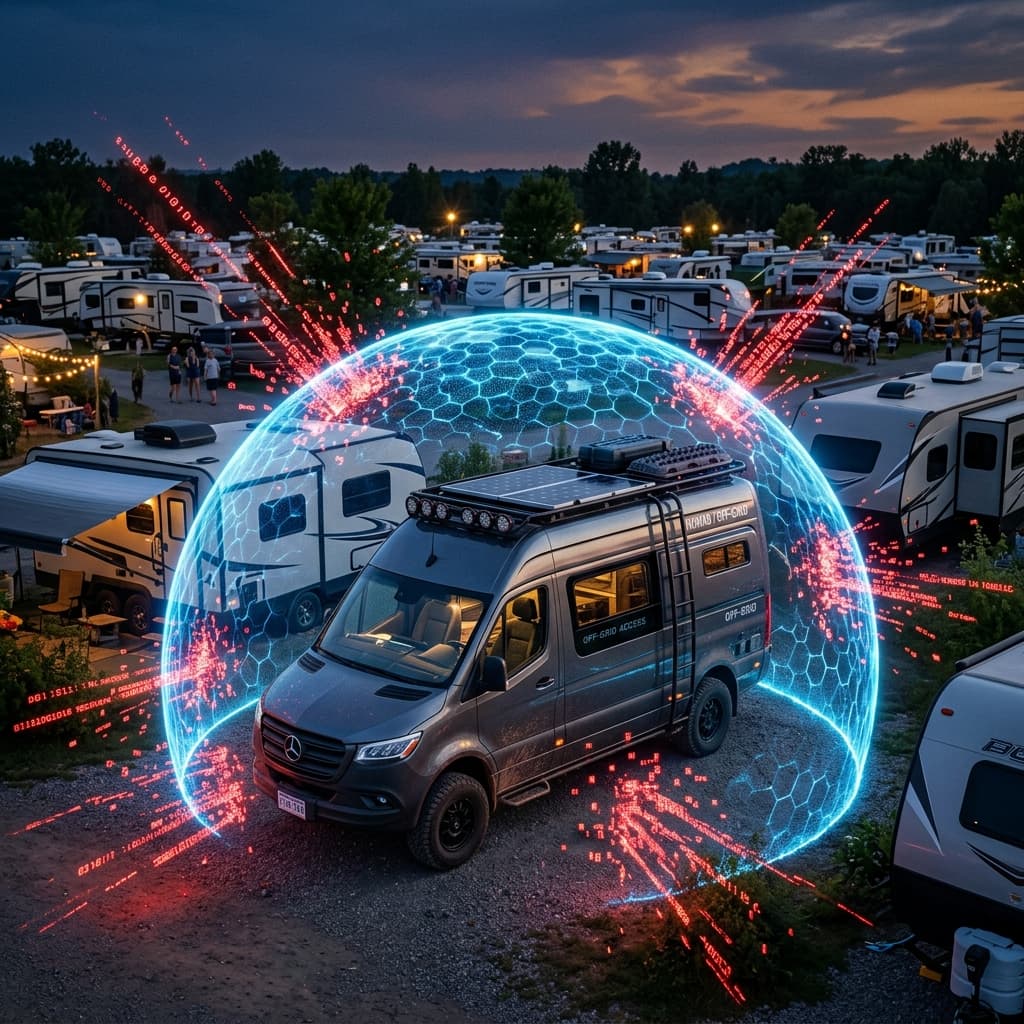
Smart RV Cybersecurity: Protecting Your Off-Grid Network in 2026
Your camper is a rolling data target. Learn how to physically and digitally secure your Starlink, Victron Gateway, and IoT devices from malicious actors roaming crowded RV parks.
Read Full Guide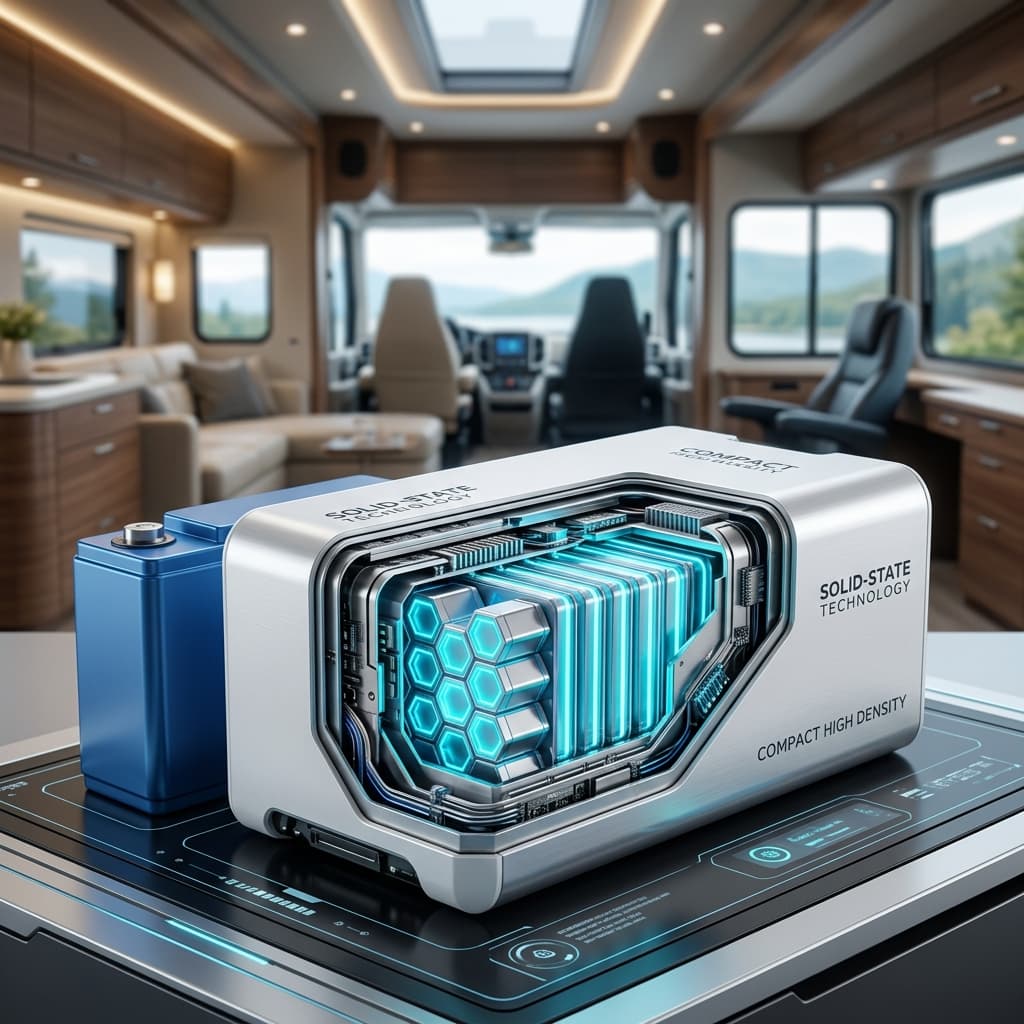
The End of LiFePO4? Solid State Batteries Arrive in the 2026 Caravaning Market
Twice the energy density, half the weight, and zero fire risk. Solid-state technology is no longer a dream, it's the 2026 reality for high-end RV builds.
Read Full Guide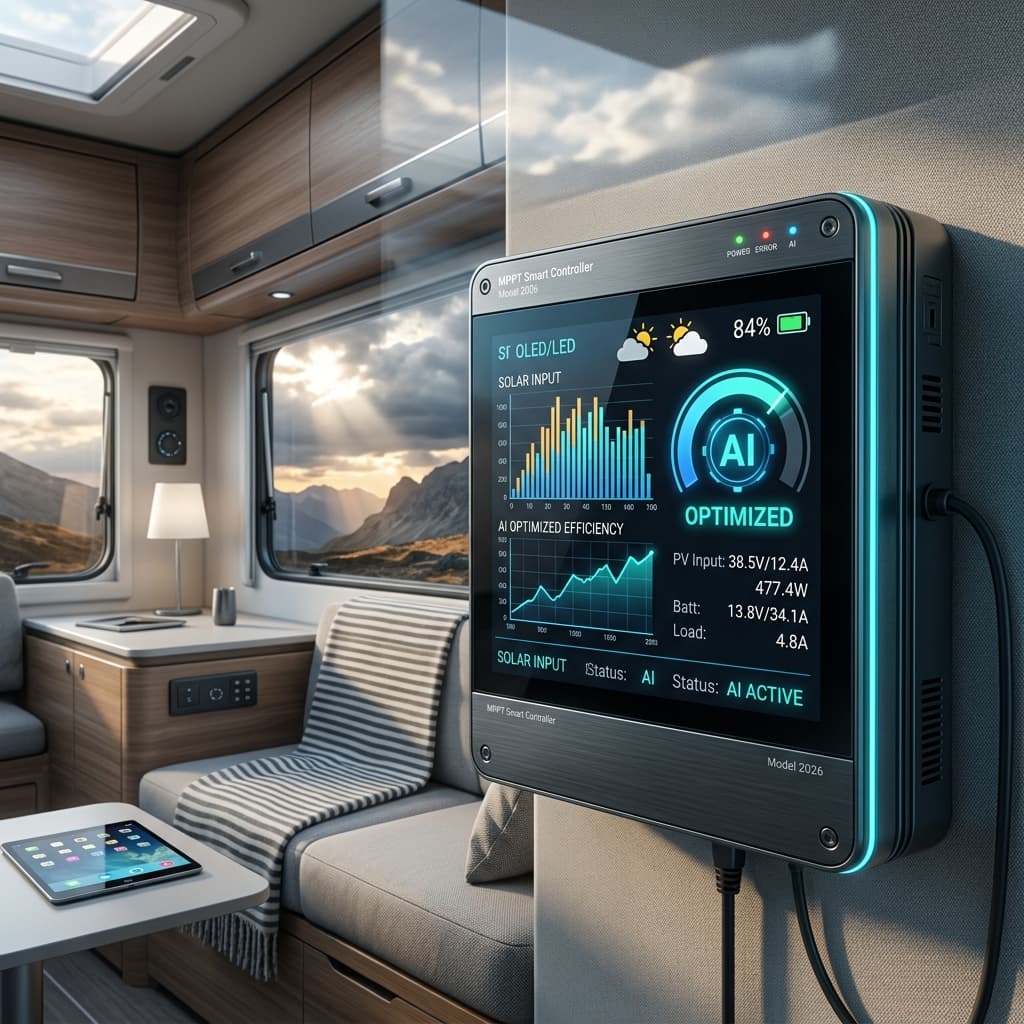
AI-Powered MPPT Solar Controllers: Real Engineering Breakthrough or 2026 Marketing Hype?
The solar industry has finally embraced Big Data. Is a weather-predictive AI MPPT worth the upgrade for your RV, or is a standard Victron still the better choice?
Read Full Guide