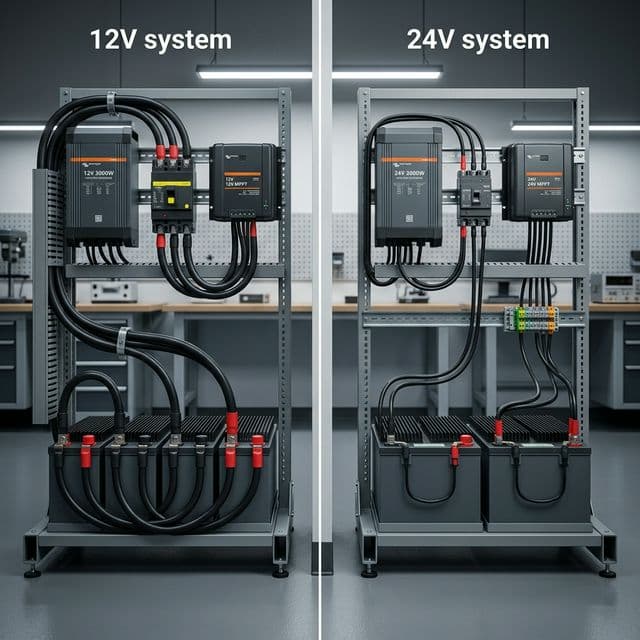
12V vs 24V Solar Systems: Finding the Efficiency Sweet Spot
As RV energy needs grow, the traditional 12V electrical system is being pushed to its physical limits. In 2025, the debate between 12V and 24V isn't just a technical curiosity, it's a fundamental decision that affects your build's cost, weight, and safety. In this 2,000-word deep-dive, we explore why 24V is winning the efficiency war and how to decide which voltage is the 'sweet spot' for your specific journey.
1. The 'Amperage Avalanche': The Limit of 12 Volts
The physics of electricity is governed by a simple equation: Watts = Volts x Amps. If you want more power (Watts), you must either increase your voltage or increase your amperage. For decades, RVs stayed at 12V because appliances were low-draw. But in the age of Starlink, induction cooktops, and 12V air conditioning, we are seeing daily power needs exceed 3,000 Watts. At 12V, a 3,000W load draws a staggering 250 Amps. This necessitates cables as thick as a garden hose and creates massive amounts of heat due to electrical resistance.
By doubling the voltage to 24V, that same 3,000W load now only draws 125 Amps. This 'Amperage Halving' is the core reason why 24V systems are becoming the standard for professional off-grid builds. It allows you to use thinner, more manageable wiring, reduces the size (and cost) of your fuses and busbars, and significantly lowers the fire risk associated with high-current DC systems.
2. Ohm's Law and the 'Copper Tax'
Resistance in a wire is constant. However, the energy lost as heat (Voltage Drop) increases with the square of the current (I²R). This means that if you double your current, you quadruple your energy loss. In a large 12V van build, you might lose 3-5% of your battery's energy just moving it from the battery bank to the inverter. In a 24V system, because the current is lower, your 'Copper Tax' is drastically reduced. Over a year of full-time travel, this increased efficiency can save you hundreds of Amp-hours of energy that would otherwise have been wasted as heat.
Ready to upgrade your rig?
Continue Your Solar Journey
Master the art of off-grid energy with our most recent expert-vetted guides and reviews.
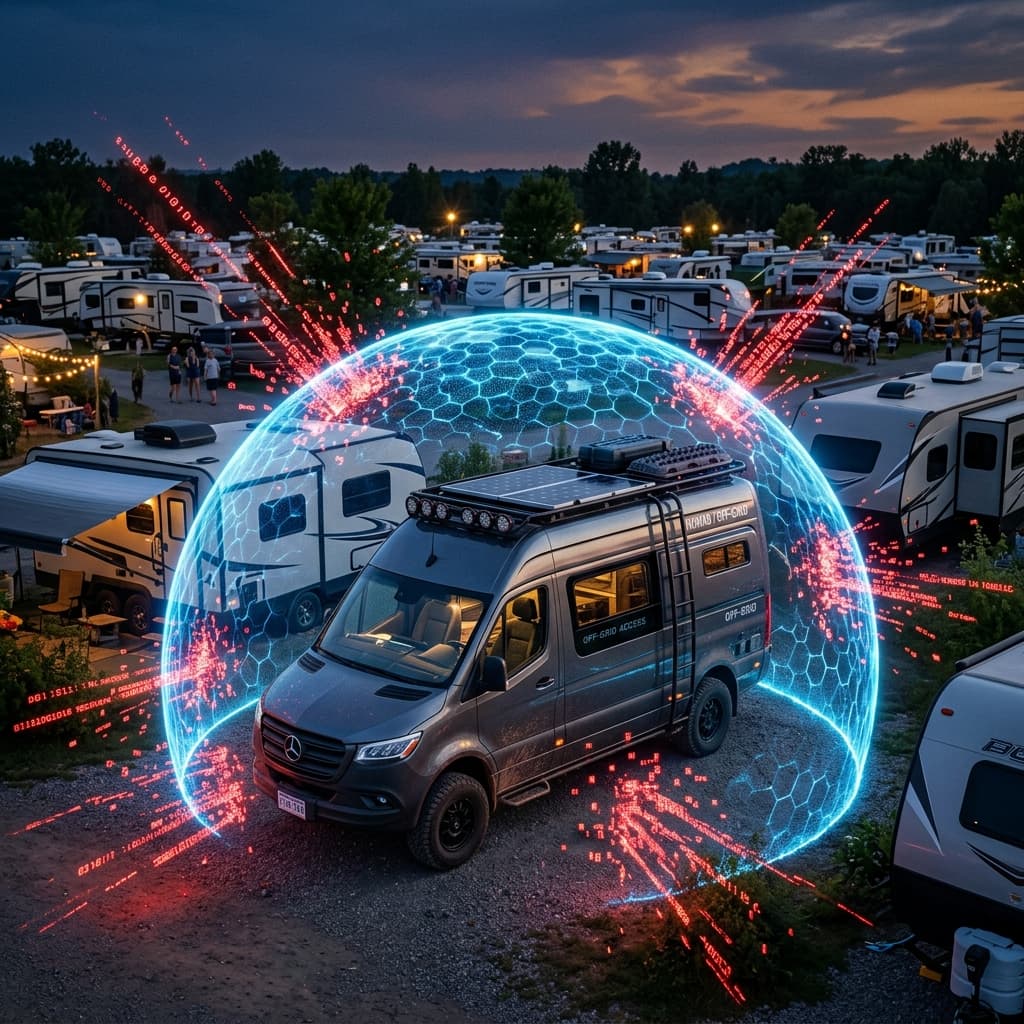
Smart RV Cybersecurity: Protecting Your Off-Grid Network in 2026
Your camper is a rolling data target. Learn how to physically and digitally secure your Starlink, Victron Gateway, and IoT devices from malicious actors roaming crowded RV parks.
Read Full Guide
The End of LiFePO4? Solid State Batteries Arrive in the 2026 Caravaning Market
Twice the energy density, half the weight, and zero fire risk. Solid-state technology is no longer a dream, it's the 2026 reality for high-end RV builds.
Read Full Guide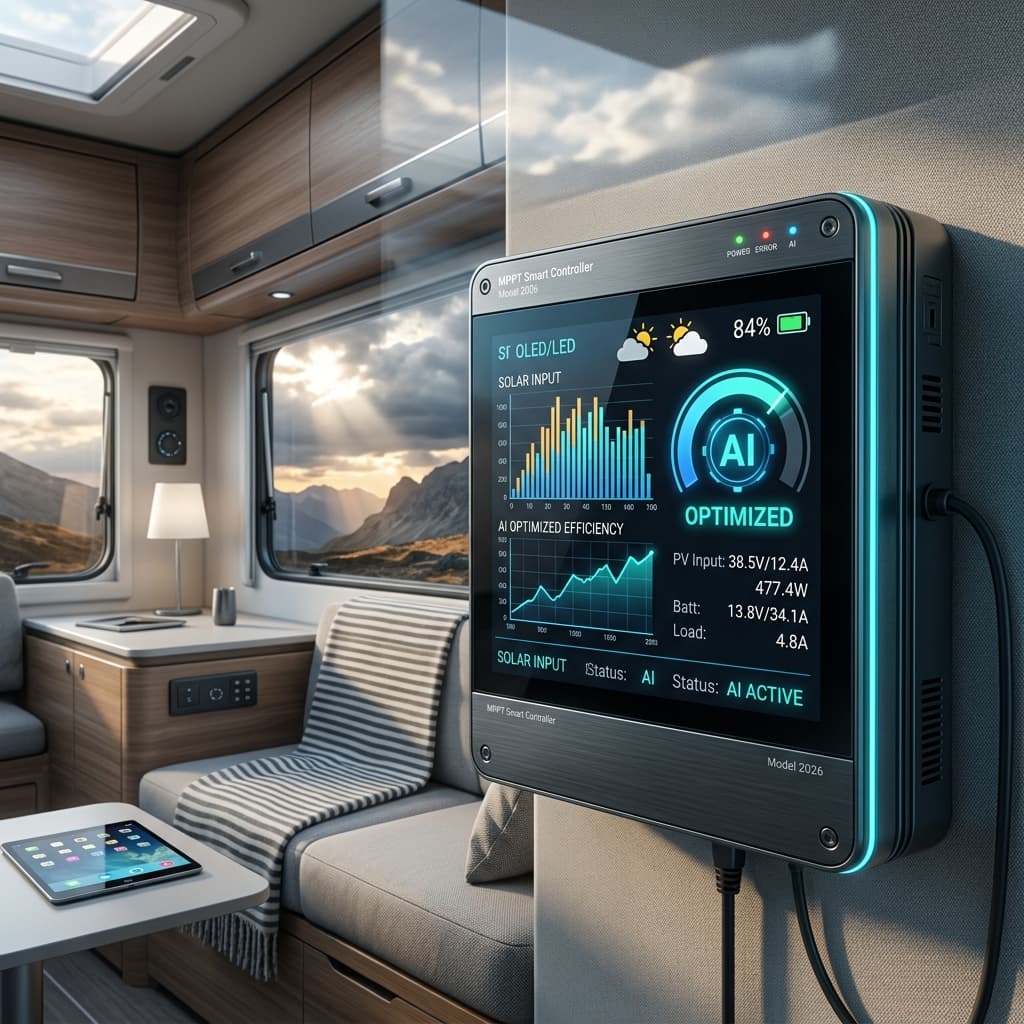
AI-Powered MPPT Solar Controllers: Real Engineering Breakthrough or 2026 Marketing Hype?
The solar industry has finally embraced Big Data. Is a weather-predictive AI MPPT worth the upgrade for your RV, or is a standard Victron still the better choice?
Read Full Guide